

AndaSeat Marks Labor Day 2026 With Kaiser 3E and Xtreme Focus as Desk Jobs Remain Highly Sedentary
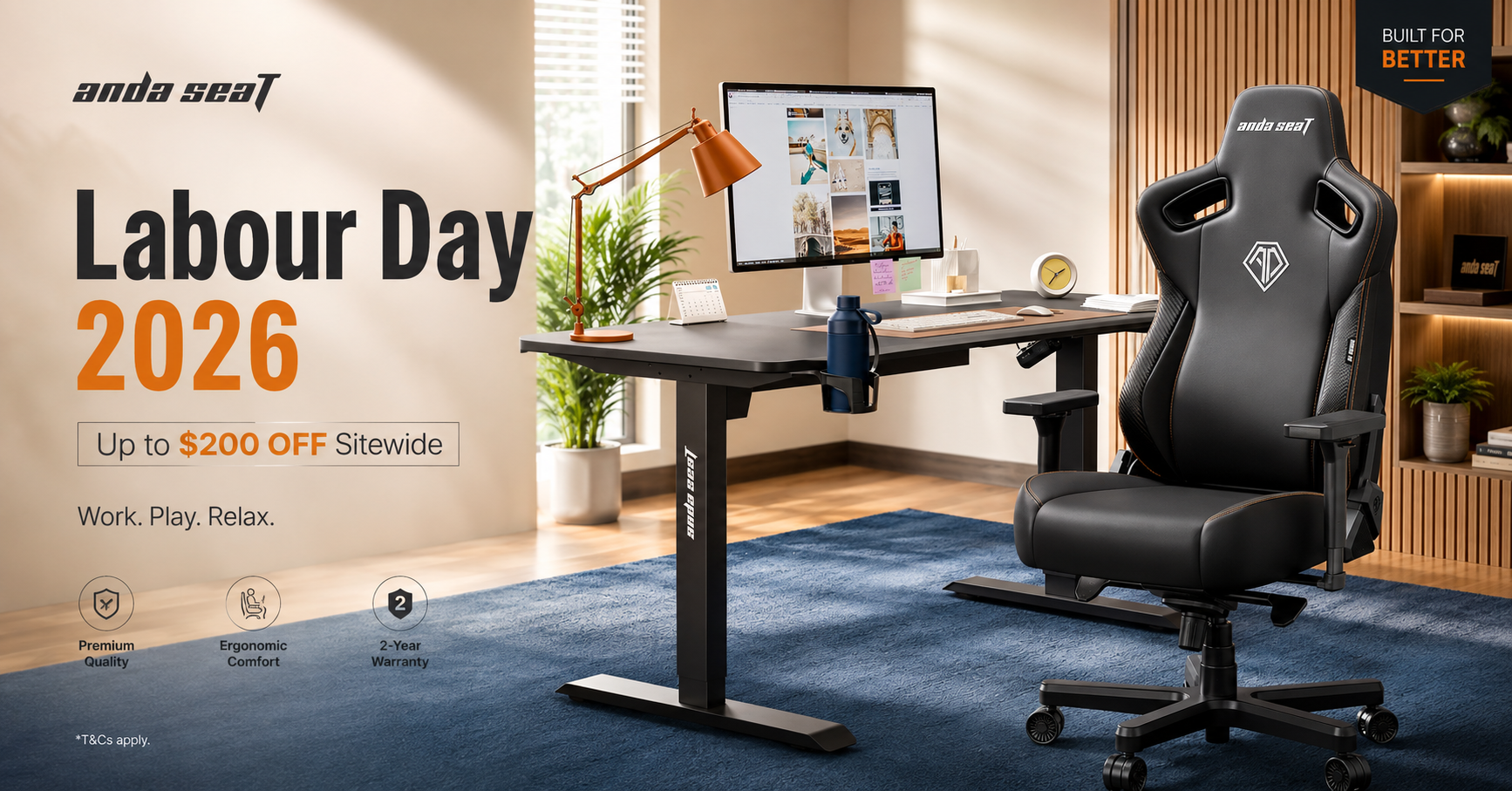
2026 Labour Day Kaiser 3E
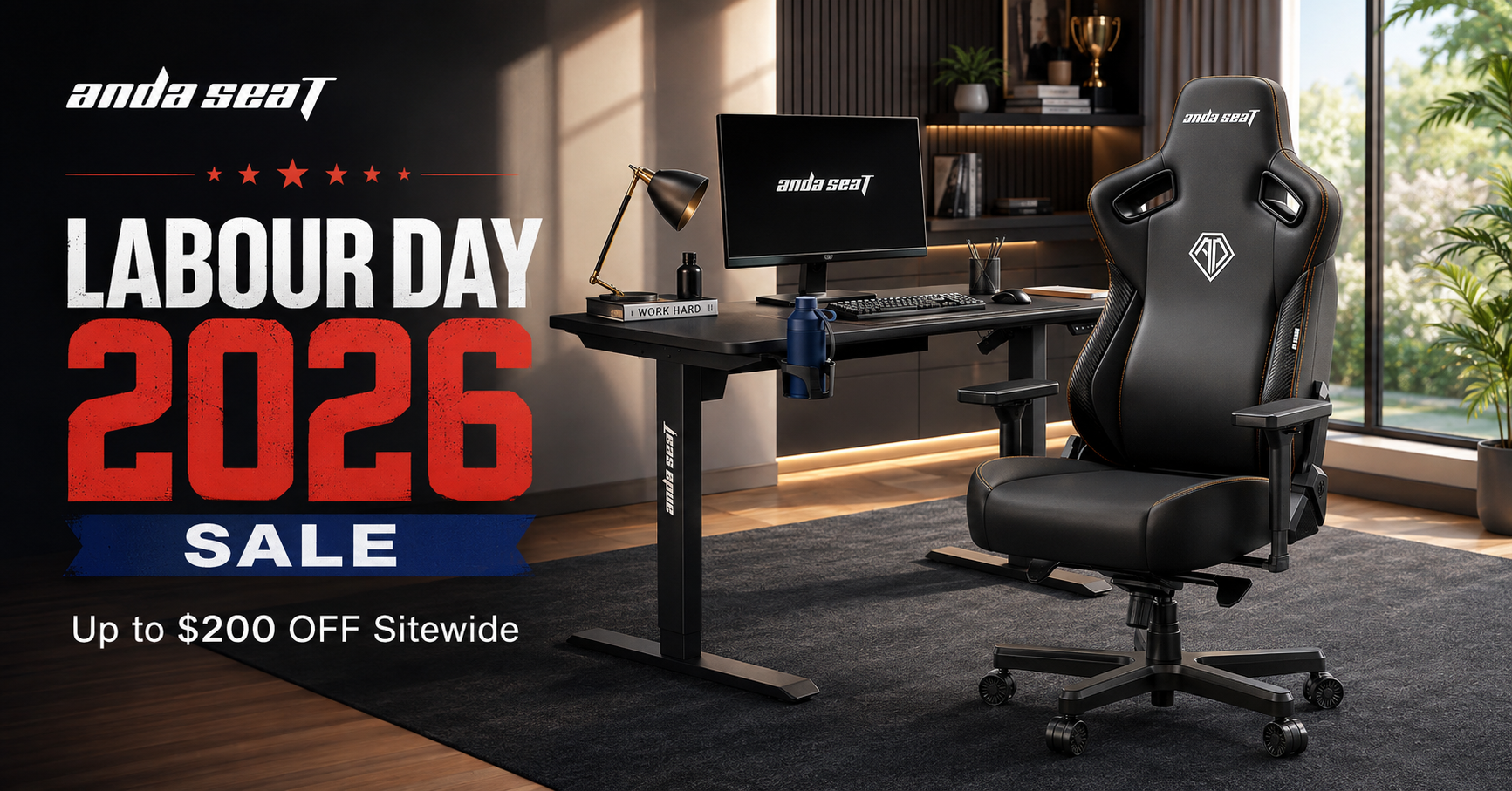
2026 Labour Day Kaiser 3E AndaSeat
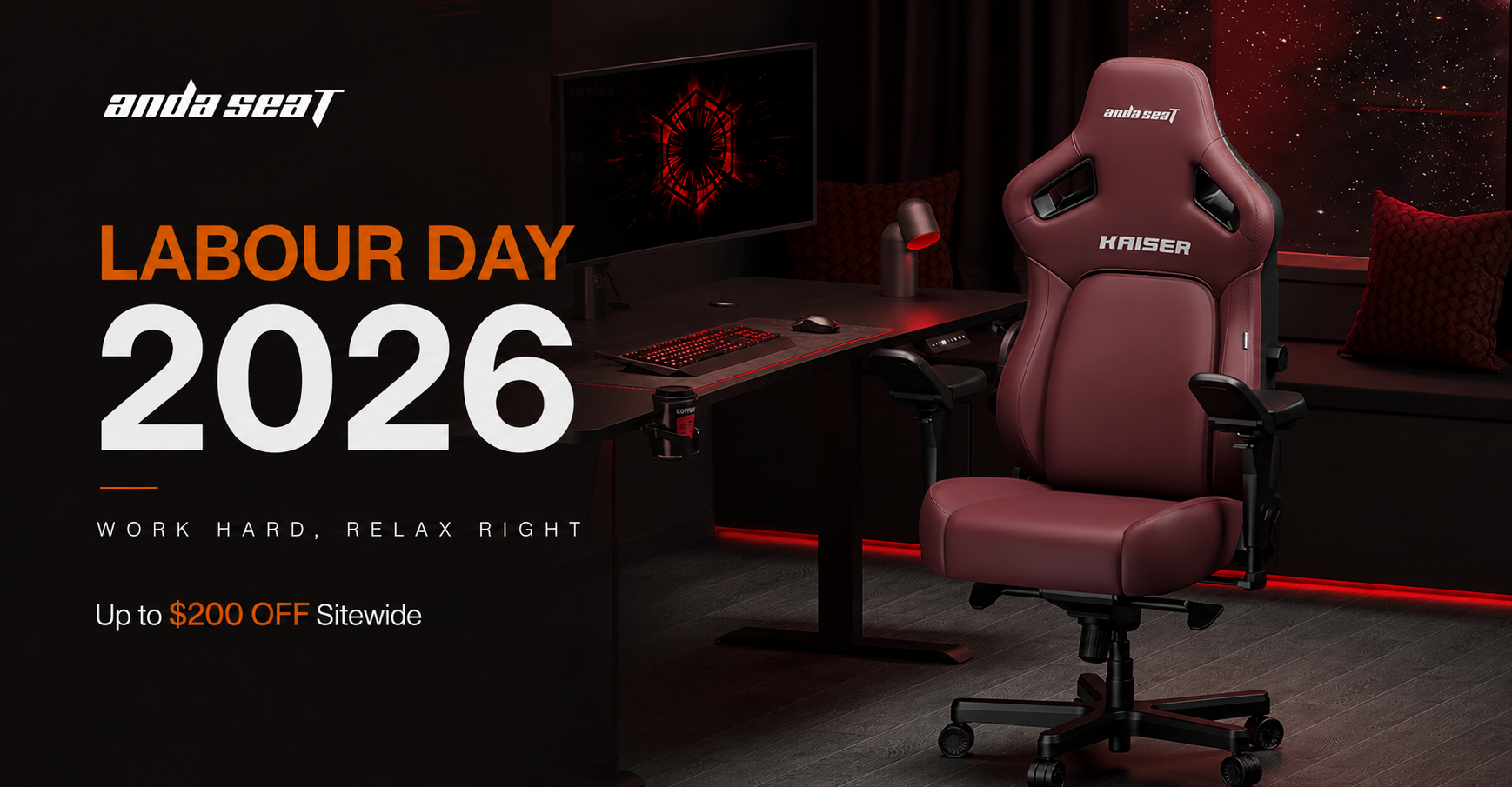
2026 Labour Day Kaiser 3E AndaSeat Dark
AndaSeat Marks Labor Day 2026 With Kaiser 3E and Xtreme Focus as Desk Jobs Remain Highly Sedentary
SPOKANE, WA, UNITED STATES, September 2, 2026 /EINPresswire.com/ -- Ahead of Labor Day in the United States, AndaSeat launched 2026 Labor Day event, and the company is highlighting the Kaiser 3E ergonomic gaming and office chair together with the Xtreme Series standing desk as a workstation configuration built around two different requirements of desk-based work: effective support while seated and the ability to change working position during the day.Labor Day arrives as current occupational data continues to show how strongly sitting is embedded in many computer-based roles.
The U.S. Bureau of Labor Statistics reported in February 2026 that workers overall spent an average of 44.9% of their workday sitting in 2025. The figure varies substantially by occupation. Software developers spent an estimated 97.1% of the workday sitting, while computer and mathematical occupations averaged 91.1% and business and financial operations occupations averaged 89.8%.
At the same time, current occupational-health guidance does not suggest replacing all sitting with uninterrupted standing.
The National Institute for Occupational Safety and Health stated in updated March 2026 office guidance that workers should be able to perform their jobs without sitting or standing for too long or maintaining awkward positions. NIOSH notes that changing equipment or furniture can be one way to improve the work environment and also points to short breaks as a means of reducing discomfort during computer work.
This creates a more balanced workstation question: rather than asking whether workers should sit or stand, how can furniture support both states without making either one the permanent default?
AndaSeat is positioning Kaiser 3E and Xtreme around that division of responsibilities.
A Standing Desk Does Not Eliminate the Need for a Supportive Chair
Sit-stand desks have become an increasingly visible response to sedentary computer work, and recent research continues to examine how much they actually change behavior.
A randomized controlled trial published in the Journal of Occupational and Environmental Medicine in April 2026 followed office workers using sit-stand desks over six months. Self-reported weekday sitting time in the intervention group decreased from 8.00 to 5.22 hours per day. The study did not find significant between-group differences in psychological outcomes.
The finding is useful because it separates two ideas that are often combined in marketing.
A height-adjustable desk can help change how much time is spent seated. It does not make the periods that remain seated irrelevant.
OSHA’s computer-workstation guidance identifies the chair as a central workstation component and recommends adequate back, leg and arm support together with sufficient adjustability for different sitting positions. It separately recommends adjustable-height work surfaces that can accommodate both seated and standing tasks.
The Kaiser 3E and Xtreme pairing follows this distinction: the desk changes the working position; the chair manages the seated portion of the workday.
Kaiser 3E Concentrates on the Fundamentals of Seated Support
Kaiser 3E is designed as a streamlined version of AndaSeat’s Kaiser platform, with its feature set centered on the structural areas that remain in continuous contact with the user.
Its backrest incorporates an approximately 4.8 cm raised lumbar contour rather than relying solely on a detachable lumbar cushion. The integrated structure creates a defined lower-back contact area whenever the user sits against the backrest.
The seat uses 60 kg/m³ cold-cure foam and measures approximately 11 cm thick. It is available in L and XL configurations, with seat dimensions of approximately 50 × 51 cm for L and 52 × 54 cm for XL.
Raised side sections of approximately 5.1 cm define the seating area, while a curved front edge is designed to reduce concentrated contact near the thighs.
The purpose of these specifications is not to claim that one fixed seat shape will fit every worker. OSHA specifically notes that seat depth, width and back support need to correspond with the individual user.
Kaiser 3E instead provides two physical sizes together with basic adjustment points so buyers can start with a more appropriate chair structure before configuring it around the desk.
4D Armrests Connect the Chair to the Work Surface
The relationship between chair and desk becomes most visible at the arms.
Kaiser 3E uses 4D armrests providing approximately 7 cm of vertical movement, 3 cm of forward-and-back adjustment, 2 cm of lateral adjustment and 36 degrees of inward-and-outward rotation.
These movements allow the forearm-support position to be altered according to desk height and input-device location.
OSHA advises that armrests, when used, should support the forearms without interfering with the chair’s ability to move into an appropriate position beneath the work surface. Its workstation checklist also recommends that seat height align appropriately with the work surface.
This is where Kaiser 3E begins to interact with the Xtreme desk.
Instead of requiring the chair alone to compensate for a fixed table that is too high or too low, Xtreme changes the height of the working surface itself.
Xtreme Adds the Workday Movement Layer
The Xtreme Series adjusts from 28.7 to 46.1 inches, or 730 to 1,170 mm.
Its electric system moves at 22 mm per second, with a company-rated operating noise level below 50 dB. Three memory presets allow frequently used work-surface heights to be stored and recalled through the digital control panel.
OSHA’s purchasing guidance describes height-adjustable work surfaces as desirable because they can accommodate a broad user range when paired with an adjustable chair and can support regular changes in working position.
Xtreme applies that idea by allowing the keyboard, mouse and other working materials to move together between seated and standing levels.
A customizable sedentary reminder can be set between 30 minutes and four hours. The feature does not prescribe a medically appropriate sitting or standing schedule; it simply creates an optional prompt for users who want a reminder to reconsider their position.
A separate 2026 randomized trial published in Applied Ergonomics also investigated structured sit-stand scheduling. In that study, desk workers with lower-back pain who followed a 30-minute sitting to 15-minute standing pattern showed improvements in several measured outcomes over three months. The authors nevertheless studied a defined participant group and a specific intervention, so the results should not be interpreted as a universal schedule for all workers.
For Xtreme, the relevant point is not the establishment of one ideal ratio. It is that the desk provides the mechanical ability to change position when appropriate.
Stability and Clearance Matter in Both Positions
A height-adjustable workstation must remain usable after it moves.
Xtreme uses a cold-formed steel T-frame with dual support beams, extended side brackets, reinforced two-stage legs and wide feet. The desk is rated for loads up to 70 kg including the desktop.
The structure is intended to maintain a stable work surface during keyboard input, mouse movement and normal changes in height.
The desk also incorporates cable routing inside one leg together with an under-desk steel cable tray. This keeps power strips and excess cable length away from the active work surface and helps preserve clearance underneath the desk.
OSHA specifically identifies inadequate under-desk clearance and clutter as factors that can restrict leg movement and force users to sit farther away from computer equipment.
That relationship matters when Kaiser 3E is used with Xtreme. The chair needs enough room to move toward the desk during seated work, while the desk requires a clear vertical path when its height changes.
Different Products Address Different Parts of the Workday
Kaiser 3E and Xtreme are not intended to perform the same ergonomic function.
Kaiser 3E provides the seated foundation through its integrated lumbar contour, cold-cure foam, L and XL size options, adjustable armrests, 155-degree recline and 15-degree rocking system.
Xtreme changes the physical work-surface level through powered height adjustment and stored presets.
One product therefore addresses how the user is supported while sitting. The other addresses whether the workday must remain entirely seated.
This distinction reflects the more nuanced direction of current workplace guidance.
NIOSH’s 2026 office guidance does not frame sitting and standing as opposing solutions. It advises against remaining in either position too long and emphasizes ergonomic equipment, task changes and breaks as parts of a broader approach.
For Labor Day 2026, AndaSeat is using Kaiser 3E and Xtreme to illustrate that same workstation principle: better desk work is not defined by eliminating the chair or standing continuously. It begins with providing adequate support when seated and enough flexibility to change position when the task and user call for it.
About AndaSeat
Founded in 2007, AndaSeat develops ergonomic seating and workspace products for gaming, professional and home environments. Its portfolio includes ergonomic chairs, standing desks, monitor arms and related workspace accessories. The company’s product-development approach focuses on adjustable support, structural engineering, workspace compatibility and furniture designed for changing work and entertainment environments.
AndaSeat Marketing
AndaSeat
email us here
Visit us on social media:
LinkedIn
Instagram
Facebook
YouTube
TikTok
X
Legal Disclaimer:
EIN Presswire provides this news content "as is" without warranty of any kind. We do not accept any responsibility or liability for the accuracy, content, images, videos, licenses, completeness, legality, or reliability of the information contained in this article. If you have any complaints or copyright issues related to this article, kindly contact the author above.
