

Nuclear Power Valve Gearbox Planning with STARD GEARS for Specialized Valve Applications

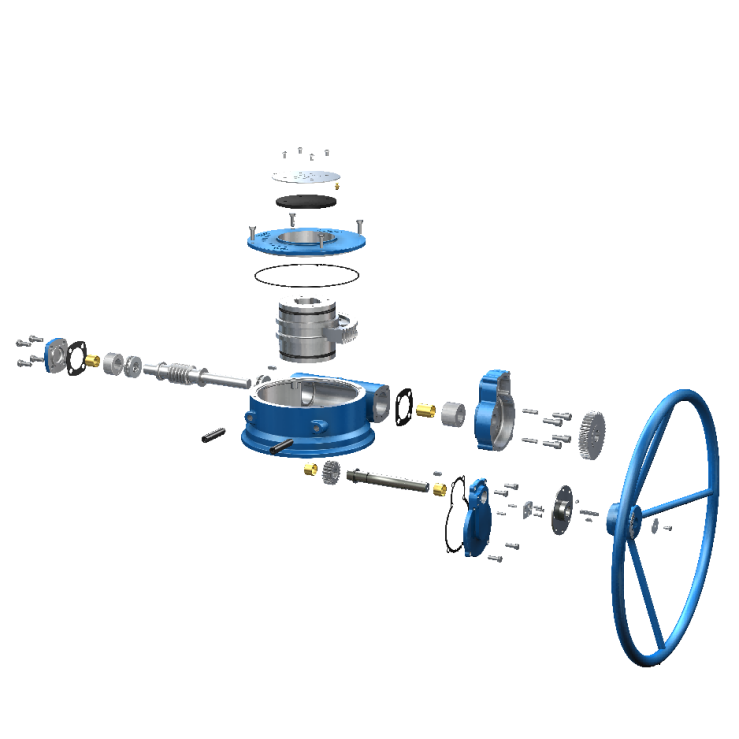
Nuclear Power Valve Gearbox Planning Begins with Project Qualification
Categorizing an actuator component for nuclear environments cannot depend solely on generic catalog classifications. While the application scope of the SGJ cast-steel quarter-turn gearbox spans nuclear power alongside oil and gas or chemical processing, moving to specialized project approval requires comprehensive engineering scrutiny. A formal procurement process must translate quality assurance levels, material traceability, design baselines, environmental limits, and documentation standards into a model-specific qualification review.
Valve manufacturers and EPC contractors must clearly define valve ratings, design life spans, seismic resilience, radiation tolerances, temperature profiles, and record-retention requirements before finalizing selections. The feasibility of a proposed solution stems directly from the initial operational envelope of the SGJ series, which is systematically validated by criteria imposed by site-specific demands or regulatory audits. By matching a WCB cast-steel housing and IP67 protection to these strict criteria, engineers establish a verifiable baseline for subsequent approval phases, ensuring every operational parameter is accounted for.
Cast-Steel Construction Provides a Technical Starting Point
Evaluating mechanical capabilities provides the necessary starting point for nuclear planning, even though materials and manufacturing controls must eventually align with elevated standards. The SGJ series delivers a robust platform through its WCB cast-steel housing, a torque range of 1,000 to 72,000 Nm, and transmission ratios between 30:1 and 1728:1. This performance range enables engineers to filter models accurately against maximum valve torque requirements, stem dimensions, and allowable handwheel forces to guarantee seamless integration.
Standard parameters for these gearboxes include temperature resilience of -20°C to 120°C and IP67 ingress protection, with options for IP68 ratings, LCB or LCC steel, stainless steel, and specialized configurations. However, relying on housing material alone is insufficient for nuclear applications. Procurement specifications must rigorously cross-check material grades, heat treatment logs, welding records, NDT results, coating systems, and parts traceability to secure approval. Moving from the baseline durability of a WCB housing to the mechanical scaling of a 30:1 to 1728:1 ratio range shifts evaluation from general advantages to an evidence-based conclusion.
Torque, Manual Effort and End-Position Control Need Verification
Manual operability within nuclear facilities demands simultaneous validation of output torque, input torque, transmission efficiency, required operating turns, limit stops, and reliable position indication. Technical specification sheets for the SGJ series provide detailed, model-specific ratings for input and output capacities, efficiency metrics, and handwheel dimensions, essential for accurate ergonomic studies and emergency operating-time assessments.
While mechanical limit screws and position indicators support end-position calibration, final confirmation of the valve’s sealing position requires integrated field commissioning under actual process conditions. The operational context of nuclear environments often involves prolonged inactivity and the necessity for flawless functionality following an unexpected incident. These severe conditions mandate that lubrication integrity, internal sealing performance, and extended maintenance cycles be integrated into the engineering evaluation. Practical execution of a control strategy relies on torque data provided in technical documentation, supplemented by operational constraints enforced by limit stops to satisfy audit requirements.
Quality Assurance and Traceability Define Nuclear Procurement Readiness
Achieving procurement readiness for nuclear applications depends heavily on internal quality planning, material traceability, inspection hold points, deviation control, and secure record keeping. STARD GEARS utilizes advanced three-dimensional simulation and finite element analysis (FEA) during the design phase, while a robust enterprise resource planning (ERP) system tracks production orders through a multi-stage quality control process. The manufacturing facility is equipped with dedicated testing capabilities to verify output torques and lifecycle endurance under controlled conditions.
Project teams must actively overlay specific nuclear requirements onto these established manufacturing processes. This includes defining approved sub-tier supplier lists, mandating critical witness points, enforcing batch traceability for pressure-retaining components, and establishing protocols for handling non-conformances. Critical documentation—such as engineering drawings, material test reports, inspection certificates, and as-built records—must be definitively linked to the specific serial numbers of gearboxes deployed on-site. The viability of a proposed supplier is grounded in rigorous design tools like 3D simulation and FEA, combined with ERP-driven order tracking to provide transparency for nuclear audits.
Qualification Documents Must Match the Intended Nuclear Service
Final approval for an SGJ gearbox in nuclear service requires meticulous reconciliation of quality assurance classifications, material records, environmental qualifications, design-life commitments, maintenance procedures, and the exact valve application. The procurement package should tie these requirements directly to the selected SGJ model, its mechanical interfaces, and its project-specific operating boundaries so that qualification evidence remains relevant to the gearbox being reviewed.
Procurement departments must clearly specify the applicable safety class, operating boundary conditions, mechanical interfaces, test acceptance criteria, and document-retention requirements before purchasing. Any statement of nuclear suitability must correspond to the approved project specification and the evidence package required for that service. Keeping the qualification review centered on the SGJ gearbox prevents unrelated product information from being mistaken for evidence applicable to the selected valve gearbox.
Nuclear Application Evidence Must Lead to a Qualification Review
Application context and product parameters associated with the SGJ series provide the starting point for technical evaluation, but project approval still depends on verified quality assurance, material traceability, and qualification documentation. Procurement teams should document the selected SGJ technical specifications, the intended nuclear-service conditions, and the required quality records within a traceable clarification process before final approval.
The SGJ series is used in nuclear power plant applications, but that application scope should be treated as a starting point for qualification rather than as automatic nuclear-grade approval. Project acceptance still depends on the quality assurance, material traceability, documentation, and audit requirements defined for the specific nuclear service. Engineering and procurement teams can use the SGJ operating parameters as the mechanical baseline and contact STARD GEARS through https://www.stard-gears.com/ to request the project-specific evidence needed before approval.
Suzhou SIP Stard Automation CO.,LTD.
STARD GEARS
email us here
Visit us on social media:
LinkedIn
YouTube
Legal Disclaimer:
EIN Presswire provides this news content "as is" without warranty of any kind. We do not accept any responsibility or liability for the accuracy, content, images, videos, licenses, completeness, legality, or reliability of the information contained in this article. If you have any complaints or copyright issues related to this article, kindly contact the author above.
