

MOPE Clinic Issues South Louisiana Metabolic Syndrome Education Advisory
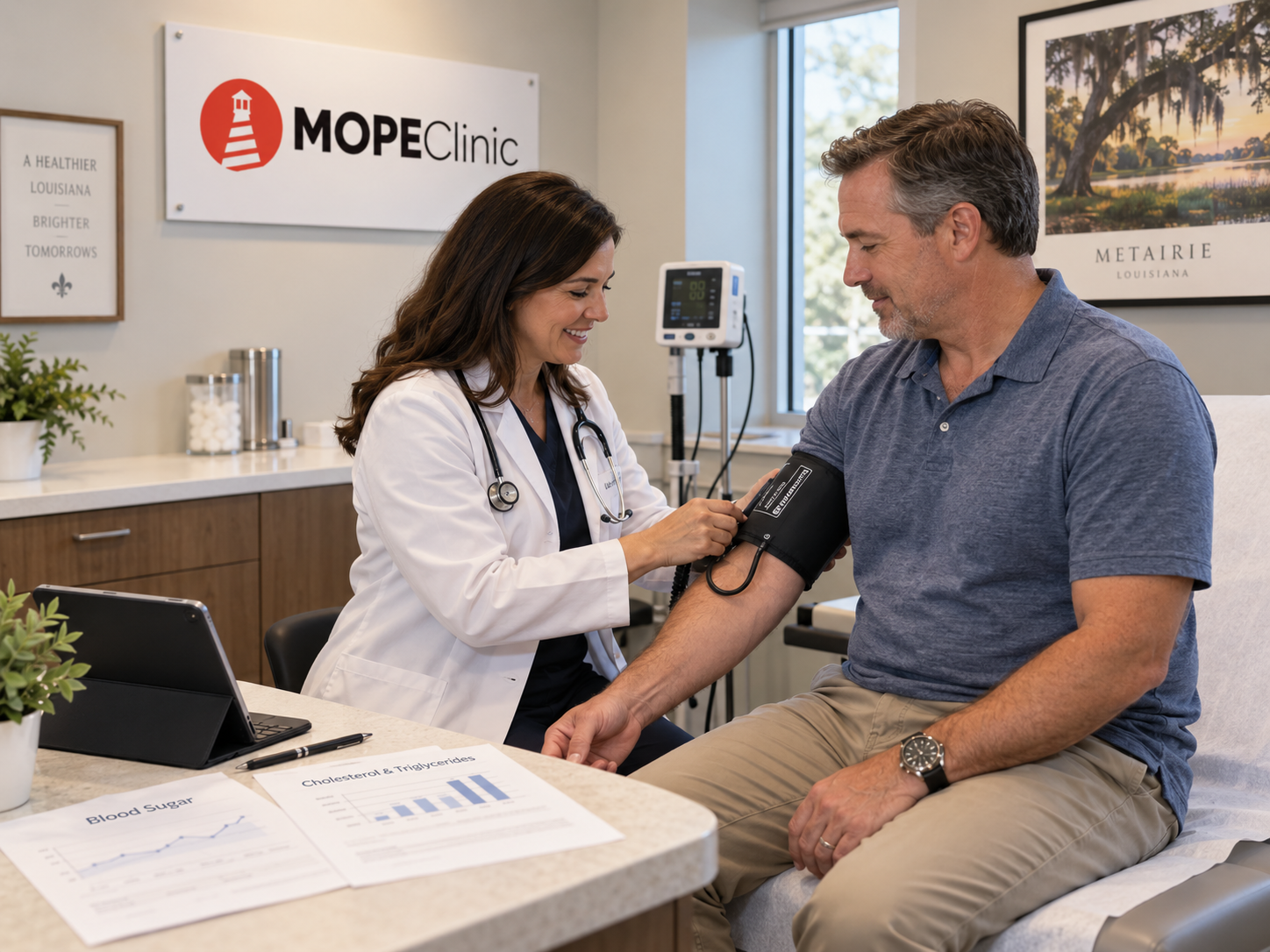
A metabolic health evaluation at MOPE Clinic in Metairie, Louisiana, including blood pressure and lab review.
Metairie medical clinic explains five metabolic syndrome risk factors, common misconceptions and practical ways adults can track metabolic health.
METAIRIE, LA, UNITED STATES, September 7, 2026 /EINPresswire.com/ -- MOPE Clinic in Metairie is sharing educational information about metabolic syndrome, a group of related health risk factors that may develop with few obvious symptoms.
Metabolic syndrome is not a single disease. Instead, the term describes a combination of metabolic and cardiovascular risk factors occurring together.
According to the American Heart Association, metabolic syndrome is generally identified when at least three of five major criteria are present: increased waist circumference, elevated triglycerides, low HDL cholesterol, elevated blood pressure and elevated fasting blood glucose.
The National Heart, Lung, and Blood Institute notes that metabolic syndrome can increase the risk of coronary heart disease, diabetes, stroke and other health complications.
Because several of the individual risk factors may cause few or no noticeable symptoms, routine blood pressure measurements and appropriate laboratory testing can play an important role in identifying changes over time.
“Metabolic health becomes easier to understand when blood pressure, glucose, triglycerides, HDL and waist measurements are considered together,” said Chris Rue, APRN, FNP-C, of MOPE Clinic. “One isolated number rarely tells the entire story.”
Understanding the Five Common Risk Factors
Commonly used metabolic syndrome criteria include:
• Increased waist circumference: Greater than 40 inches in men or greater than 35 inches in women under commonly used U.S. criteria. Clinical interpretation can vary by individual and population.
• Elevated triglycerides: A triglyceride level of 150 mg/dL or higher, or treatment for elevated triglycerides.
• Low HDL cholesterol: Below 40 mg/dL in men or below 50 mg/dL in women, or treatment related to low HDL levels.
• Elevated blood pressure: Blood pressure of 130/85 mm Hg or higher, or treatment for hypertension.
• Elevated fasting glucose: Fasting blood glucose of 100 mg/dL or higher, or treatment for elevated blood sugar.
Meeting one of these criteria does not mean a person has metabolic syndrome. Generally, at least three must occur together.
A healthcare professional may also consider medications, family history, body composition, kidney and liver health, sleep, smoking history, physical activity and other medical conditions when evaluating metabolic risk.
Why Symptoms Alone May Not Be Enough
A growing waistline may be visible, but other metabolic changes can remain hidden.
High blood pressure frequently produces no symptoms. Abnormal triglyceride or HDL cholesterol levels may also go unnoticed without testing. Mild elevations in blood glucose can develop gradually.
For that reason, a person may feel relatively well while several markers are changing.
Body weight alone can also provide an incomplete picture. Two adults who weigh the same can have different blood pressure readings, glucose levels, cholesterol patterns and cardiovascular risk profiles.
Metabolic Health in South Louisiana
Daily routines in Metairie, New Orleans and surrounding South Louisiana communities can create practical challenges for maintaining consistent health habits.
Long workdays, restaurant meals, social gatherings, irregular sleep and prolonged periods of hot and humid weather may affect activity patterns and food choices.
These factors do not independently diagnose or cause metabolic syndrome. However, lifestyle patterns can interact with genetics, age, insulin resistance, smoking, sleep disorders and existing medical conditions.
During late summer and early fall, South Louisiana heat can also make regular outdoor activity more difficult. Indoor activity or walking during cooler parts of the day may offer practical alternatives.
Practical DIY Tips for Tracking Metabolic Health
Home tracking cannot diagnose metabolic syndrome. However, several simple steps may provide useful information for future medical appointments.
Track blood pressure consistently.
When checking blood pressure at home, sitting quietly beforehand, keeping the feet flat on the floor and supporting the arm can improve consistency.
Keep copies of laboratory results.
Rather than recording only whether results were described as “normal,” keeping the actual numbers makes it easier to identify trends over time.
Measure waist circumference periodically.
Waist measurements can provide additional context alongside weight, blood pressure and laboratory results.
Reduce sugar-sweetened beverages.
Soft drinks, sweet tea, energy drinks and heavily sweetened coffee can add significant amounts of sugar to the daily diet.
Increase daily movement gradually.
The Centers for Disease Control and Prevention notes that physical activity can support blood glucose management. A short walk after a meal can be a realistic starting point for adults who are medically able to exercise.
Prioritize regular sleep.
Consistent sleep supports overall health and may make nutrition and physical activity routines easier to maintain.
Look at long-term trends.
One meal, one blood pressure reading or one missed workout does not define metabolic health. Patterns over weeks and months are more useful.
Frequently Asked Questions About Metabolic Syndrome
Can someone have metabolic syndrome without diabetes?
Yes. Diabetes is not required. Elevated fasting glucose is only one of five commonly used metabolic syndrome criteria.
Does belly fat automatically mean metabolic syndrome?
No. Waist circumference is one risk factor. A diagnosis generally requires at least two additional criteria.
Can someone have metabolic syndrome and feel completely normal?
Yes. Several risk factors, including high blood pressure, abnormal triglycerides and elevated glucose, may cause few noticeable symptoms.
What blood tests are commonly reviewed?
Fasting glucose, triglycerides and HDL cholesterol are central to the diagnostic criteria. Depending on the individual, clinicians may also review A1C, LDL cholesterol, kidney function, liver markers and other laboratory results.
What does A1C measure?
A1C estimates average blood glucose over roughly the previous two to three months. It may provide additional information when evaluating blood sugar patterns.
Can metabolic syndrome improve?
Many individual risk factors can improve through physical activity, nutrition changes, weight management, smoking cessation, adequate sleep and appropriate medical care.
Is metabolic syndrome diagnosed using only body weight?
No. Weight by itself is not one of the five diagnostic criteria. Waist circumference, blood pressure, triglycerides, HDL cholesterol and fasting glucose provide more specific information.
Should someone change medication after seeing abnormal numbers at home?
No. Prescription medications should not be started, stopped or changed without guidance from a qualified healthcare professional.
Medical Evaluation Remains Important
Home monitoring and lifestyle changes can support better awareness, but they do not replace clinical evaluation.
MOPE Clinic is a physical medical clinic at 4417 Lorino St. #103 in Metairie. The clinic requires appropriate laboratory testing before treatment and uses medical history, symptoms, clinical findings and individual goals when developing personalized treatment plans. MOPE Clinic is LegitScript-certified and is not a virtual-only prescription provider. These clinic details are published on its official contact page.
A more detailed metabolic syndrome educational resource is available through MOPE Clinic near the end of this release.
About MOPE Clinic
MOPE Clinic is a medical clinic in Metairie, Louisiana serving adults from Metairie, New Orleans, Covington, Slidell, Houma and other South Louisiana communities. Chris Rue, APRN, FNP-C, is a board-certified Family Nurse Practitioner with more than 15 years of clinical experience. The clinic emphasizes appropriate laboratory testing, individualized medical evaluation and ongoing clinical monitoring.
Media Contact
Chris Rue, APRN, FNP-C
MOPE Clinic
4417 Lorino St. #103
Metairie, LA 70006
504-265-5491
info@mopeclinic.com
Gwen M.
Designs For You
email us here
Visit us on social media:
Facebook
Legal Disclaimer:
EIN Presswire provides this news content "as is" without warranty of any kind. We do not accept any responsibility or liability for the accuracy, content, images, videos, licenses, completeness, legality, or reliability of the information contained in this article. If you have any complaints or copyright issues related to this article, kindly contact the author above.
